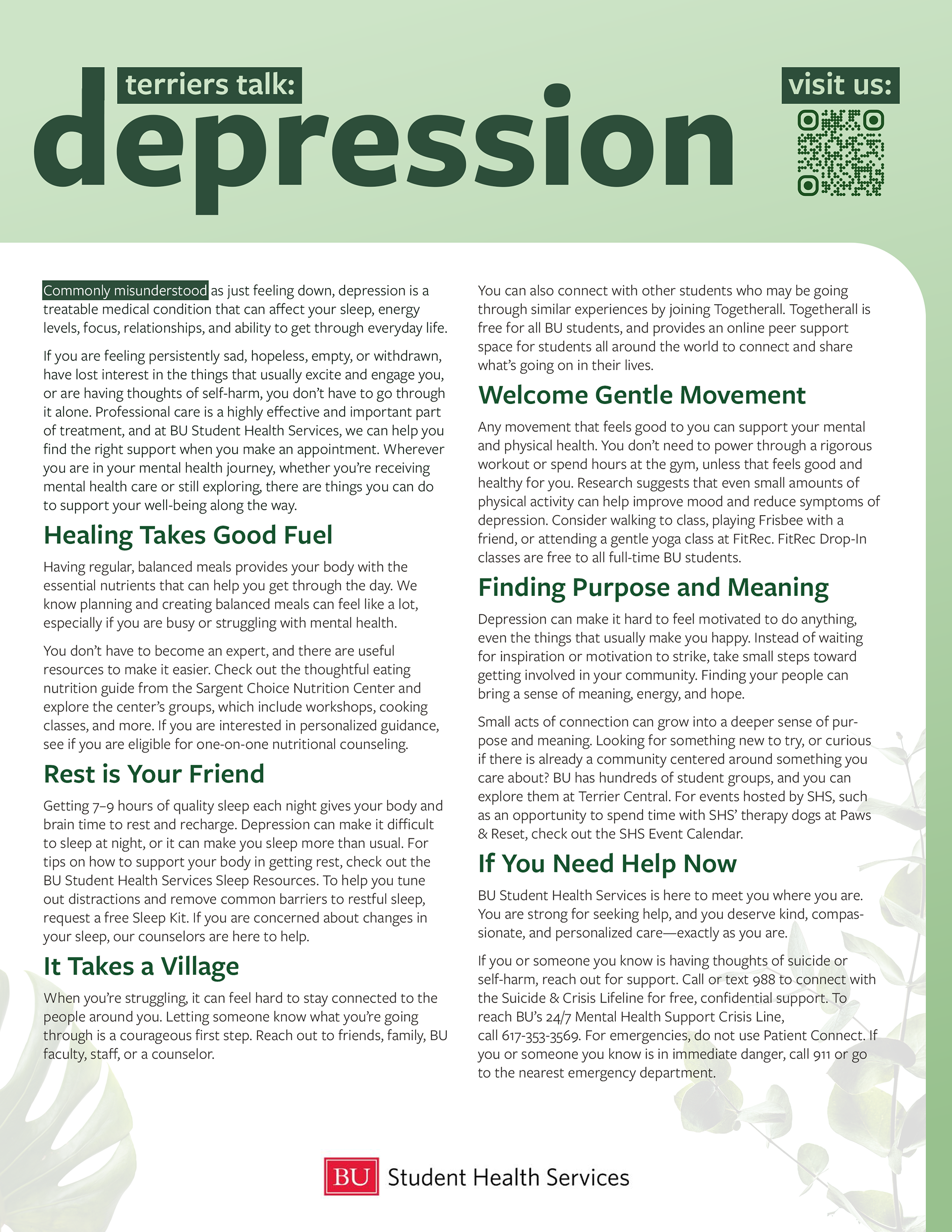
Terriers Talk Depression
I reworked and edited the BU health writing sample on depression and developed a brand identity, Terriers Talk Depression, to align with the warm, compassionate tone of BU Student Health Services. I incorporated links to relevant student resources, creating opportunities to track engagement and identify future marketing and communication opportunities. I then developed a ready-for-print version to demonstrate how the content could be adapted across different formats and channels.
Terriers Talk Depression
Commonly misunderstood as just feeling down, depression is a treatable medical condition that can affect your sleep, energy levels, focus, relationships, and ability to get through everyday life.
If you are feeling persistently sad, hopeless, empty, or withdrawn, have lost interest in the things that usually excite and engage you, or are having thoughts of self-harm, you don’t have to go through it alone. Professional care is a highly effective and important part of treatment, and at BU Student Health Services, we can help you find the right support when you make an appointment. Wherever you are in your mental health journey, whether you’re receiving mental health care or still exploring, there are things you can do to support your well-being along the way.
Healing Takes Good Fuel
Having regular, balanced meals provides your body with the essential nutrients that can help you get through the day. We know planning and creating balanced meals can feel like a lot, especially if you are busy or struggling with mental health.
You don’t have to become an expert, and there are useful resources to make it easier. Check out this thoughtful eating nutrition guide from the Sargent Choice Nutrition Center and explore the center’s groups, which include workshops, cooking classes, and more. If you are interested in personalized guidance, see if you are eligible for one-on-one nutritional counseling.
Rest is Your Friend
Getting 7–9 hours of quality sleep each night gives your body and brain time to rest and recharge. Depression can make it difficult to sleep at night, or it can make you sleep more than usual. For tips on how to support your body in getting rest, check out the BU Student Health Services Sleep Resources. To help you tune out distractions and remove common barriers to restful sleep, request a free Sleep Kit. If you are concerned about changes in your sleep, our counselors are here to help.
It Takes a Village
When you’re struggling, it can feel hard to stay connected to the people around you. Letting someone know what you’re going through is a courageous first step. Reach out to friends, family, BU faculty, staff, or a counselor.
You can also connect with other students who may be going through similar experiences by joining Togetherall. Togetherall is free for all BU students, and provides an online peer support space for students all around the world to connect and share what’s going on in their lives.
Welcome Gentle Movement
Any movement that feels good to you can support your mental and physical health. You don’t need to power through a rigorous workout or spend hours at the gym, unless that feels good and healthy for you. Research suggests that even small amounts of physical activity can help improve mood and reduce symptoms of depression. Consider walking to class, playing Frisbee with a friend, or attending a gentle yoga class at FitRec. FitRec Drop-In classes are free to all full-time BU students.
Finding Purpose and Meaning
Depression can make it hard to feel motivated to do anything, even the things that usually make you happy. Instead of waiting for inspiration or motivation to strike, take small steps toward getting involved in your community. Finding your people can bring a sense of meaning, energy, and hope.
Small acts of connection can grow into a deeper sense of purpose and meaning. Looking for something new to try, or curious if there is already a community centered around something you care about? BU has hundreds of student groups, and you can explore them at Terrier Central. For events hosted by SHS, such as an opportunity to spend time with SHS’ therapy dogs at Paws & Reset, check out the SHS Event Calendar.
If You Need Help Now
BU Student Health Services is here to meet you where you are. You are strong for seeking help, and you deserve kind, compassionate, and personalized care—exactly as you are.
If you or someone you know is having thoughts of suicide or self-harm, reach out for support. Call or text 988 to connect with the Suicide & Crisis Lifeline for free, confidential support. To reach BU’s 24/7 Mental Health Support Crisis Line, call 617-353-3569. For emergencies, do not use Patient Connect. If you or someone you know is in immediate danger, call 911 or go to the nearest emergency department.
Print Article Treatment